Empowerment Self Defense (ESD) is a holistic and trauma-informed approach to self-defense that focuses on preventing and responding to violence, particularly gender-based violence. It goes beyond physical techniques and includes psychological, verbal, and strategic skills to help individuals recognize, avoid, and resist threats effectively.
At its core, ESD empowers individuals within their social and cultural contexts, to prevent, resist, and recover from violence. Through multi-modal methodologies, individuals learn to expand their awareness, assess their options, recognize threatening behavior, assert boundaries, de-escalate heightened situations, escape to safety, and physically defend themselves. Instructors may use a variety of activities, games, full-force drills, role-play scenarios, guided discussions, or other embodied and active learning processes to teach through strengths and successes rather than fear and weaknesses.
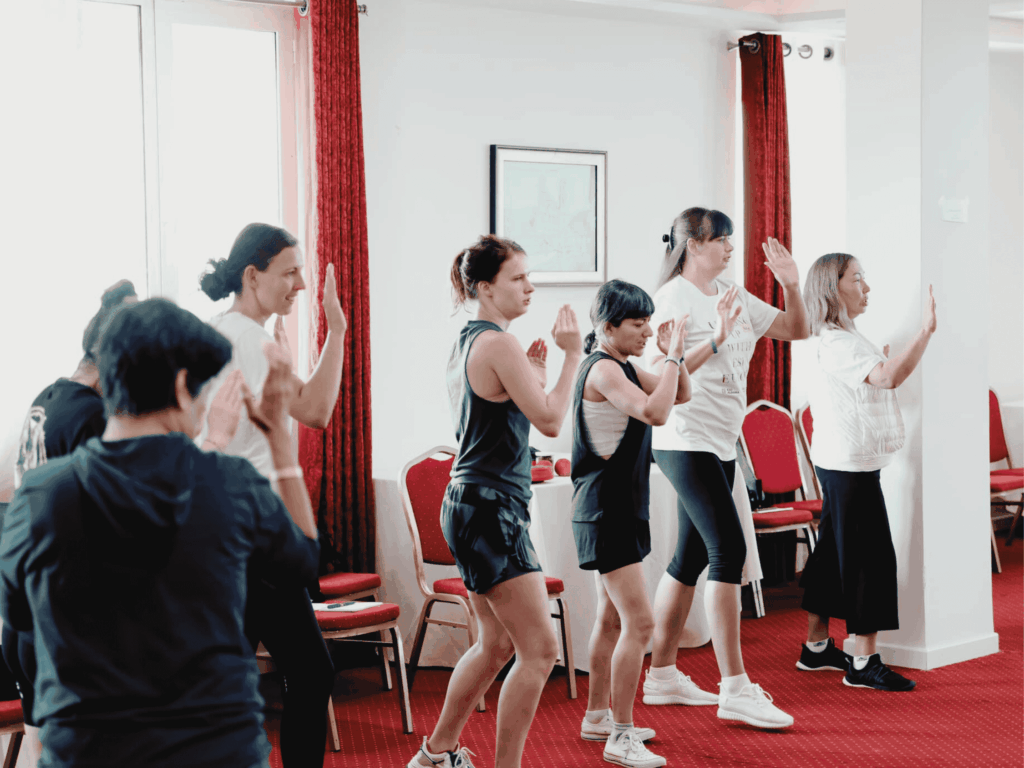
ESD instructs simple to learn, easy to remember, and powerful to use skills that anyone can acquire within a few hours rather than with years of practice.
The training effectively uses brain and behavioral sciences to complement our neurobiological and natural stress reactions (such as fight, flight, freeze) helping individuals respond in adrenalizing and activating situations. With a focus on expanding rather than restricting participants’ choice, options, and agency, ESD combats myths about violence and who can access self-defense, addresses interpersonal and domestic violence, and aligns with movements for social and political change including advocating for social justice.
While the contemporary form of Empowerment Self-Defense training was fashioned out of the second-wave feminist movement of the 1960s and 1970s in the United States (Her Own Hero: The Origins of the Women’s Self-Defense Movement by Wendy L. Rouse, all ESD training is a descendant of grass-roots self-defense practices created by women and other marginalized people who forever have sought to combat interpersonal and community violence.
Today, ESD training has evolved to include a wide range of styles and inclusive methods that make it more relevant to diverse and international participants. While ESD still successfully serves cis-gender women, many instructors are using the core principles and empowerment model to provide courses to men, children and teens of all genders, LGBTQIA2S+ and non-binary people, People of Color worldwide, refugees and immigrants, trauma survivors, older adults, and people with a range of disabilities, ability levels, and body types.
ESD courses are globally adaptable, considering cultural contexts, intersectional identities, and diverse scenarios while being teachable in any language. Instructors come from varied backgrounds—martial arts, healing arts, fitness, social work, education, and advocacy—united by a commitment to violence prevention. Often women or marginalized individuals, many are trauma survivors dedicated to empowering their communities.
The distinction between Empowerment Self-Defense (ESD) and traditional self-defense is founded on fundamental differences in approach, scope, and ultimate goals.
While traditional methods primarily focus on the physical techniques for an acute, violent confrontation, ESD adopts a holistic, preventative, and psychological framework.
ESD recognizes those who experience violence do not cause, invite, ask for, or deserve to be attacked, harassed, or abused. Only perpetrators are accountable.
Honors and respects any decisions made in the moment to survive, be it before or after taking a class. Never blaming the victim of an attack.
Does not give answers but offers tools, respecting participants as experts in their own lives.
Is trauma-aware, acknowledging that trauma is wide-spread, shows up in the body, and can be activated through self-defense practice.
ESD recognizes those who experience violence do not cause, invite, ask for, or deserve to be attacked, harassed, or abused. Only perpetrators are accountable.
Can be tailored to all body types, abilities, ages, backgrounds, and lived experiences.
Teaches to the individual instead of expecting the individual to conform to the teaching; and makes space for student voices and experiences.
FIGHT FORWARD. Join the movement.
Join the association as a member and grow as an ESD Professional. We are here to support you as you empower the world – creating safer communities together.